You might be wondering why it is common to see an Australian Shepherd with a docked tail. Are Australian Shepherds born without tails?
Despite the fact that not all Australian shepherds have shortened tails, we see a lot of them. Is a docked tail beneficial to the dog?
Tail-docking is done primarily to meet certain breed standards and to avoid tail injuries. It was once believed that tail-docking would increase productivity and improve health and safety, so it was commonly practiced.

How to Get an Australian Shepherd Docked Tail
You can make your dog’s tail docked by dock tailing. So first, let’s define tail docking so that we can discuss the most common reasons for tail docking in Australian Shepherds in greater detail.
There is a good chance that any dog you see has had its tail docked as a puppy if it is short or stubby.
The breeder may perform this procedure before you bring the puppy into your home in order to achieve a signature look. Tail docking does not remove all of a dog’s hair, but rather trims it to a shorter length in order to meet a particular breed’s aesthetic requirements.
Tail docking is usually done on puppies between the ages of 3 and 5 days. Because a puppy’s nervous system is still developing, it is thought that the procedure will be less painful for them.
Tail docking in young puppies is performed without general anesthesia because of this belief. With surgical scissors, the veterinarian can quickly remove the desired amount of the tail, or occlude a portion of the tail for a few days to prevent blood supply.
A standard surgical procedure, tail docking is an option for older dogs. Dogs undergoing surgery must be properly anesthetized and provided with post-operative pain medication and antibiotics, among other things.
In order to have the procedure done, you will need to find a clinic that accepts tail docking as a procedure. It’s unlikely that a puppy’s tail will grow back after it’s successfully docked.
SEE ALSO: When Do Australian Shepherds Go Into Heat? Here is the Complete Guide
Why Are Docked Tail Australian Shepherds so Common?
There are a number of reasons for the question “why are Australian Shepherds tails docked”.
It’s time to get down to the nitty-gritty of why tail cropping is so prevalent in the wild.
The majority of Australian shepherd tail docking nowadays is done for aesthetic purposes and to meet breed standards. It’s possible that you’re going for work, but that’s extremely rare.
The beginning of tail docking:
Tail docking in dogs has a long history that dates back to Roman times. The Romans may have thought that long dog tails were able to catch rabies, so they trimmed the top of the canine tail to protect themselves from the disease.
Shortened tails have long been thought to aid in a dog’s ability to run faster. Due to the prevalence of dogs as hunting aids, they reasoned that this procedure would grant them an advantage in terms of speed.
In the field, a working dog’s tail is often a magnet for foxtails and burrs that can be harmful to the dog. Dogs’ tails are sometimes docked in order to reduce the risk of them suffering further tail injuries, which could reduce their usefulness as service dogs.
A large number of cropped-tailed Australian Shepherd dogs serve as companions rather than working companions for their owners. Tail docking is often used as a means of adhering to breed tradition in situations like this.
Many breeders prefer to dock their puppies’ tails before they find a new home because of the Aussie’s distinctive appearance. The docked tail has become a distinguishing characteristic of Australian shepherds. As a result, it is still practiced today.
Do Australian Shepherds have tails docked naturally since birth?
In the first week of life, most Australian Shepherds will have their tails docked, but some may not need it. It is estimated that one in five Australian shepherds is born with a natural bobtail, which means they have only one or two vertebrae in the tail.
This characteristic results in a short, stubby tail that can be difficult to tell apart from a dog whose tail has been surgically shortened. There’s no way to tell if your dog has a naturally curly hairstyle unless you have a thorough history from your breeder.
A recessive gene known as the C189G gene is responsible for this genetic mutation, which can be passed down in any Australian shepherds. Despite what you may think, a short tail is not a sought-after trait in the breeding industry.
Natural bobtail Aussies shouldn’t ever be bred with other bobtail Aussies because the offspring they produce can suffer greatly.
RELATED: Is Your Australian Shepherd Fat? How To Help Him Lose Weight!
How Do Vets Cut Australian Shepherd’s Tail?
For a variety of reasons, a puppy’s tail is surgically docked, like preventing injuries and cosmetic purposes. Dogs’ tails can be shaved in one of two ways.
The most common way to do this is to use a scissors to trim the end. A good pair of scissors, of course. You’ll have to make several cuts through connective tissue and possibly even a few nerves to accomplish this.
In addition, there is no anesthesia or painkiller used during this procedure.
As an alternative, you can sever the flow of blood to the tail with a tightly wrapped rubber band around it. Eventually, the tail will fall off after a long period of time. It’s not as common as it used to be, however.
Evidence of Pain
There has been much discussion about whether or not these puppies can feel pain, but no one has come to a firm conclusion.
When a puppy’s tail is cut, screams and other high-pitched noises are common. Professionals are patching up tail wounds as this continues.
Although it is subjective, the sound of agony is not the same as the sound of joy. It is clear to me that the dog is at least in some discomfort at this point.
It is countered by the fact that a large number of puppies have their tails docked during sleep. Puppies may be overly dramatic when they wake up, but this isn’t necessarily the case.
There’s no way they’ll remember having their tails docked at a young age, with pain or no pain.
Breeding Bobtail Australian Shepherds Can Be Dangerous
A natural Aussie with tail docked has its own set of risks, as we mentioned earlier. Having two copies of this recessive gene can have serious consequences for their future litters, including birth defects and womb reabsorption.
One of the most common causes of Spina Bifida and other spinal defects in puppies born to two bobtail Aussies is interbreeding. An Australian shepherd breeder’s worst nightmare is when a puppy is born with a debilitating condition that necessitates euthanasia.
Because of the risk of producing puppies with serious health issues, many believe that bobtail Aussies should never be bred. You should only buy an Aussie with a surgically docked tail if you intend to breed your dog in the future.
Only about 2% of the dogs giving birth to naturally bobtail puppies had to be euthanized. Non-bobtail breeding dogs are also included in this survey. That said, the likelihood of crossing two wild bobtails is much higher.
Please note that if you are looking for an Aussie with a tail, you may want to look into one of the many Australian Shepherd mixes available. Many of them have tails that are naturally occuring.
POPULAR: Australian Shepherd Ears: How to Care for Them
For Australian Shepherds, Tail Docking Has Many Advantages
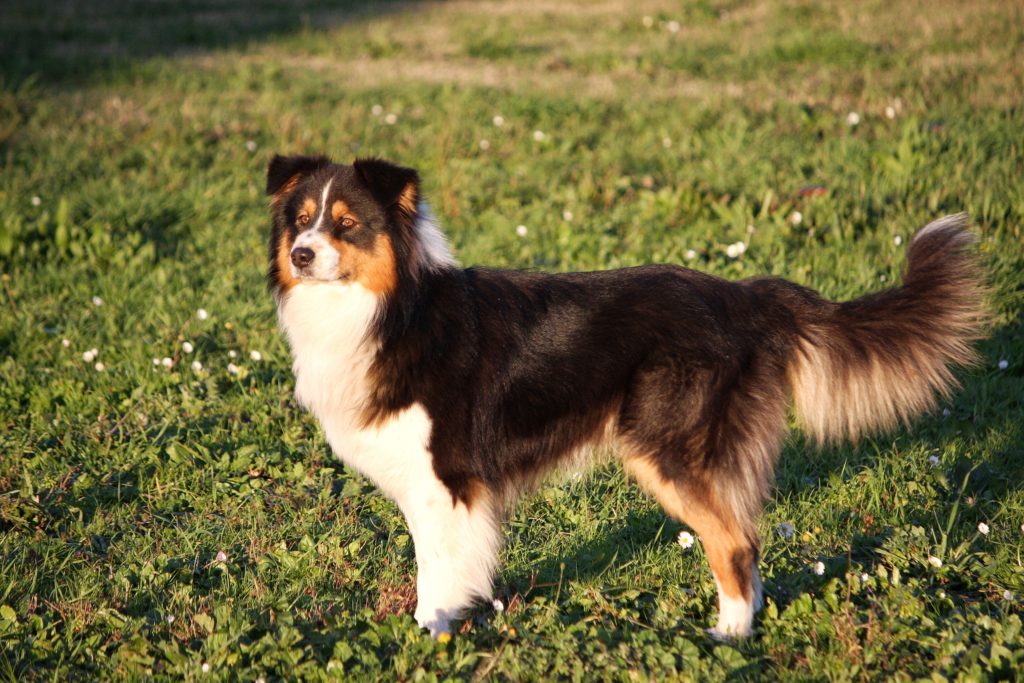
Tail docking has to have some benefits if it’s so widely used around the world. Working dogs, who are more likely to suffer a tail injury, are the primary beneficiaries. These are some of the reasons why do Australian Shepherds have no tail:
• For hygienic purposes
Australian Shepherd tails can become extremely matted if they are not properly cared for because of their long hair. Their tails can also be used to gather plant matter, waste, and other debris.
• Tail injury prevention
“Happy tail” is a medical term for when a dog’s tail becomes excessively wagging. This is an injury that occurs when a dog’s tail hits a hard surface, resulting in a wound on the tail that needs to be treated. Tail docking can prevent both of these problems.
• Standard for Australian Shepherd Type
Due to the fact that Australian Shepherds were initially bred for the role in which this method makes more sense, it became the norm for the breed. Again, this was done as a preventative measure.
Many Aussies are no longer used for livestock herding, however. The following points aren’t relevant if you simply desire a wonderful family companion and live in a favorable environment.
The Drawbacks of Australian Shepherd Tail Docking
Tail docking is a hot-button issue in the dog-loving community, as we’ve previously discussed. Tail docking has its own set of risks, ranging from chronic pain to incontinence.
• It could be painful
Even though many breeders claim that puppies don’t notice when their tails are shaved, there is no evidence to support this claim. As puppies are still developing their nervous systems, it is impossible for them not to feel pain.
• Socialization
Dogs communicate primarily through the flicking of their tails. In some instances, docking a dog’s tail makes it more difficult for them to socialize with other dogs.
• Chronic pains
Docking the tails of some Australian Shepherds can result in long-term pain. They may suffer from nerve sensitivity or secondary spinal tumors, which can cause long-term pain.
• Incontinence
Tail docking can cause incontinence in some Australian Shepherds, although this is an extremely rare occurrence. As a result, a dog is unable to hold their bladder properly, which can have a significant impact on their genes.
• It is opposed by AVMA
Even though tail docking is legal, the American Veterinary Medical Association considers it unnecessary because of the potential for pain and unclear benefits. The AVMA should be considered a major con if it opposes anything related to pets.
TOP ARTICLE: Why are There Australian Shepherds with Blue Eyes?
The length of an Australian Shepherd’s tail when docked
Australian Shepherd tail docking length is typically trimmed to a length of 4 inches or less.
If you want to avoid the problems described above for your dog, what tail length should you aim to achieve? The ideal tail length for full-sized Australian Shepherds is four inches.
American Kennel Club regulations allow for bobbed tails in the breed, provided that they are a result of natural mutations in the animal.
There are specifications for every part of an Australian Shepherd, including its color, coat texture, hindquarters and forequarters, torso, topline and neck, nose, skull, ears, eyes, and head.
Therefore, it should come as no surprise that some dog owners and breeders choose to crop a dog’s ears in addition to docking the dog’s tail.
Taking Care of Australian Shepherd Docked Tail vs Undocked Aussies
Australian Shepherds with long tails have fur that is just as long. A tangled or matted tail is more likely to occur when your dog is going about his daily business.
Matting is extremely painful for dogs when they are brushed at home, as you may already know. If you can’t detangle the knots, you may have to cut the hair.
Your Shepherd’s tail may cover more of their back even if they avoid tail matting, because of their longer tail length. As a result, it is more likely that a dog will have feces in their tail when they go to the bathroom.
Your Shepherd’s tail can easily spread the feces to other parts of their body if you don’t notice them right away. Cleanup becomes a hassle after that.
READ MORE: Australian Shepherd Shedding Guide: How Much Do Aussies Shed?
Tail Wagging and Communication Between Australian Shepherds

There are a variety of reasons why Australians wag their tails (or, in the case of a stub tail, their buttocks). They use it a lot to get their point across to you.
The fact that a dog is wagging its tail doesn’t necessarily mean it’s happy. It’s possible that they’re also showing signs of nervousness or fear. Put all the other context clues they are giving you together to understand their tail wags.
Do they have any movement in either their earlobes, eyes, or stance? In addition, paying attention to these things will help you understand why your Australian Shepherd is wagging their tail.
Here are a few things your Australian Shepherd might be trying to tell you through its tail:
• The dog is chilling and unconcerned – The natural position of a dog’s tail when at rest. Taking a nap, lying down, or simply strolling around.
• The dog is greeting – When a dog approaches you and jumps on you or tries to get your attention, it usually gives a big carefree wag and makes eye contact.
• The dog is curious – The dog is eager to learn. Gently wagging backwards. The tail is held in a slightly lowered position. Intense and curious staring could be a possibility. I’m relying on you for support.
• The dog is frightened or nervous – Tail tucked between their legs, possibly wagging a bit. Whimpering, crying, or trembling. Tension in the body; eyes lowered; ears tucked back. It could also be an attempt to show a submissive attitude.
• The dog is aggressive – The animal’s tail is erect and elongated. Posing, stiff, and glancing at the camera. Barking and growling are both possibilities.
• The dog is in a joyful mood – Effortless wagging. Happy expressions and a wiggled body. A treat or a toy may be the source of this relaxed state, as evidenced by the body going in circles around it rather than tensing up.
The direction your dog’s tail wags can also indicate positive or negative emotions, according to a recent study.
When a dog waves his or her tail to the right, it’s a good sign that the dog is happy or relaxed. Negative feelings, such as nervousness or fear, can be expressed by wagging their tails on the left side of their body.
Some dogs are more enthusiastic tail-waggers than others, according to the breed. If your dog isn’t wagging its tail a lot, it’s probably not a problem. You’ll just have to practice spotting other nonverbal cues in order to figure out what they’re saying.
If your dog’s tail has stopped wagging recently, it could be a sign that something else is wrong with them. Having just moved in, or them being new to your home, this could simply be a sign that they are anxious and need some time to adjust.
LEARN MORE: Is Your Australian Shepherd Not Fluffy? What You Can Do About It
Frequently Asked Questions: About Australian Shepherd Docked Tail
• Does It Really Matter If You Dock Your Aussie’s Tail?
You have complete discretion over whether or not to dock the tail of your Australian Shepherd. And you don’t have to do it either.
Tail injury is an issue for many working dogs, so if you have one, you may want to consider the benefits.
To me, the disadvantages outweigh the benefits of having my dog’s tail docked. Many of the drawbacks of having a tail can be remedied with simple cosmetic procedures, which is why they’re so hotly debated.
You can prevent painful knots and keep your Australian Shepherd’s tail as clean and sanitary as possible with daily grooming. It is possible to sustain a tail injury, but it is not as common as you might imagine.
If you’re on the fence about having your pet’s tail shaved, we recommend talking to your veterinarian about your concerns.
• Why are Aussies tails docked?
The practice of docking the tails of Australian shepherds is becoming less common. The AKC currently requires Australian shepherds to have a docked tail (no longer than four inches) or a natural bobtail in order to be considered “breed standard.”
• What Is the Meaning Behind Docked Tails on Australian Shepherds?
Tail docking was once considered a performance and injury prevention measure. Aesthetics and appearance are the primary factors in tail docking nowadays. Owners who want their Aussie to meet “breed standards” will sometimes dock the dog’s tail.
• Is it necessary to dock a dog’s tail?
No. Tail docking is a necessity for dogs, especially Australian shepherds, who are known for their long, thick tails. Having one’s tail docked has far more disadvantages than advantages. Every year, the practice of shaving one’s tail is declining in popularity.
• If a dog has its tail docked, does it hurt it?
The fact that pups have pain receptors from birth, contrary to popular belief, doesn’t mean that tail docking is any less painful because of the young age at which it is performed.
As a result of the procedure’s lack of anesthesia, many see it as cruel and unnecessary.

• What Length Should Australian Shepherd Tails Docked Have?
Shorter than four-inch tails are the norm for dogs. The AKC’s breed standard requires a tail less than 4 inches in length (at least for Australian Shepherds).
RECOMMENDED: Australian Shepherds in Cold Weather: How to Deal With It
• Advantages When Owning an Australian Shepherd
Australian Shepherds make wonderful pets, regardless of whether you prefer dogs with short or long tails. They need a lot of space to run around and play because of their hyperactivity, and an apartment without a yard may be too small for them.
Australian Shepherds have a lot to offer their owners, including the following:
• When it comes to playing, they’re always up for a challenge and enjoy retrieving frisbees and balls.
• The dogs are extremely clever and pick up new tricks very quickly.
• They can expect to live between 12 and 15 years.
• They’re kind and devoted.
• Australian shepherds are exceptional watchdogs who are fiercely loyal to their families.
• Owners who enjoy the great outdoors and aren’t afraid to take their dogs for a run will find these dogs ideal.
• Your Australian Shepherd may offer to herd your other pets if you have other animals in the house.
Final Thoughts
A long history of herding animals influenced breeders’ decision to favor short-tailed traits in Australian Shepherds. Breeders choose carefully when breeding bobbed-tail dogs because they are less prone to tail injuries.
Adults with recessive genes can produce puppies that are unhealthy and may die in the womb, even if they are male or female. Because of this, most breeders prefer to cut the tails of their puppies rather than breed for bobbed tails.
While it’s considered more humane to cut their tails when they’re young, some dog owners prefer to leave their pets’ tails long.
If it has a long or short tail, the Australian Shepherd is an energetic and loyal companion that will bring joy to your life for many years.
Clearly, having an Australian Shepherd docked tail is common even today. The information we discussed above will help you better understand this practice going forwards, so make sure to review it!
Share your thoughts by commenting down below! We would love to hear from you.


Leave a Reply